Android 17
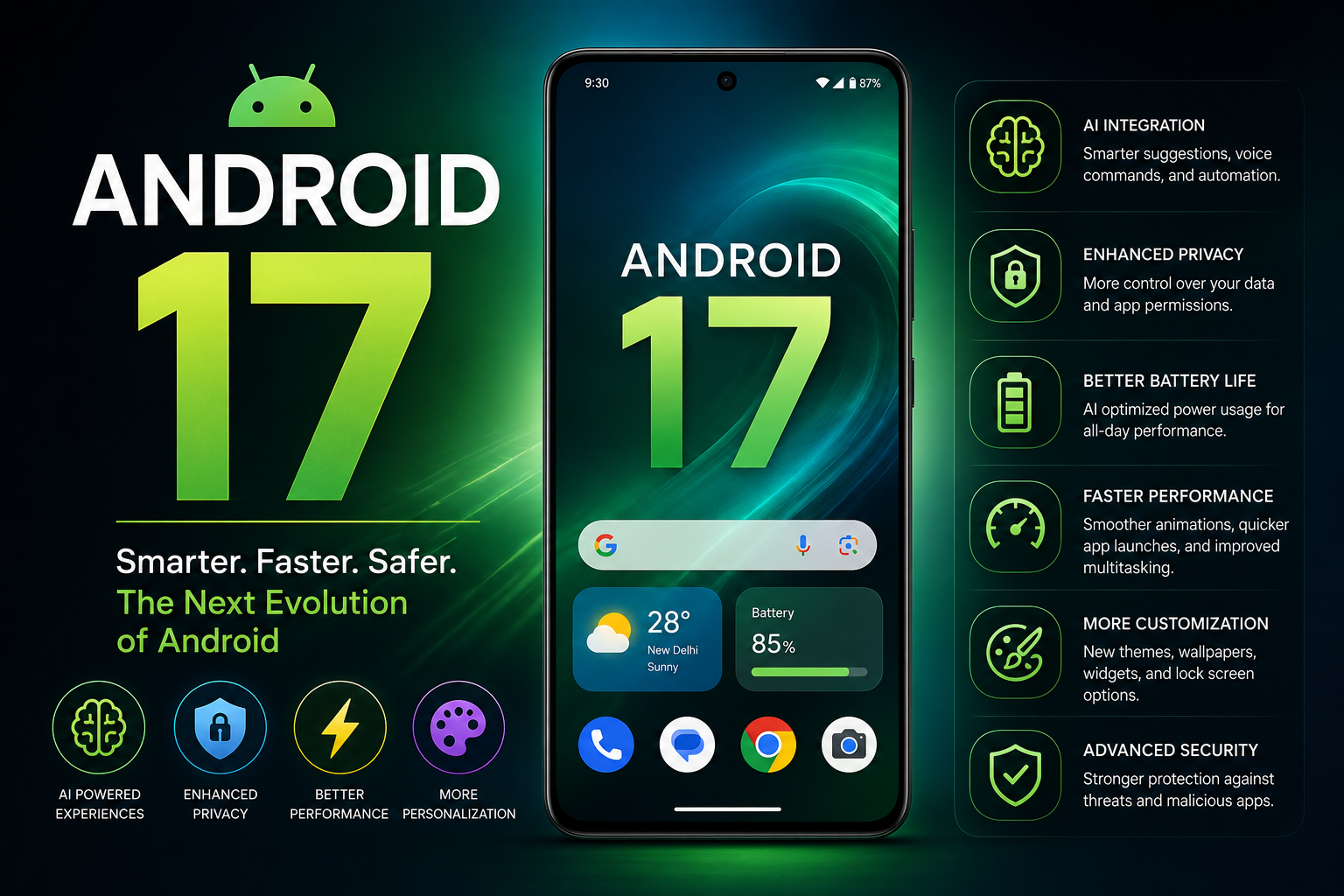
Android 17 continues to evolve every year, bringing new features, better performance, stronger security, and smarter artificial intelligence capabilities. Following the success of previous Android versions, Android is expected to introduce significant improvements that enhance the overall smartphone experience.
From AI-powered tools and improved battery management to stronger privacy controls and enhanced customization options, Android aims to make Android devices smarter and more efficient than ever before.
In this comprehensive guide, we’ll explore everything you need to know about Android , including its expected features, benefits, compatibility, and future impact on the Android ecosystem.
What Is Android 17?
Android is Google’s next-generation mobile operating system designed for smartphones, tablets, foldable devices, and other Android-powered hardware.
The operating system focuses on:
- Artificial Intelligence
- Security
- Performance
- User Experience
- Battery Optimization
- Device Integration
Android continues Google’s vision of creating a more intelligent and personalized mobile platform.
Android 17 Release Date
Google traditionally unveils new Android versions during its annual developer events.
Android is expected to follow a similar release schedule with:
Developer Preview
Early versions become available for developers to test new features and applications.
Beta Releases
Beta versions allow users to experience upcoming features before the official launch.
Stable Release
The final version becomes available for supported devices worldwide.
Google typically prioritizes Pixel devices before expanding availability to manufacturers such as Samsung, Xiaomi, OnePlus, Oppo, Vivo, and others.
Android 17 Features
One of the biggest reasons users look forward to Android updates is the introduction of new features.
Android is expected to bring multiple improvements across different areas.
Advanced AI Integration
Artificial intelligence is becoming a major part of Android.
Android 17 may include:
- Smarter voice commands
- Better predictive suggestions
- AI-powered search
- Intelligent app recommendations
- Automated task management
These features help users complete everyday activities faster.
Improved Google Assistant
Google Assistant continues to evolve with AI advancements.
Expected improvements include:
- More natural conversations
- Better contextual understanding
- Faster responses
- Improved smart home control
- Enhanced productivity assistance
The assistant becomes more useful for both personal and professional tasks.
Enhanced Privacy Controls
Privacy remains a major concern for smartphone users.
Android 17 may introduce:
- Better permission management
- Improved tracking protection
- Enhanced location privacy
- Stronger data controls
- More transparent app access settings
These updates provide users with greater control over personal information.
Better Battery Optimization
Battery life is one of the most important aspects of any smartphone.
Android 17 is expected to include:
- Smarter power management
- Improved background app control
- AI-based battery optimization
- Reduced power consumption
These improvements can help devices last longer between charges.
Faster Performance
Performance enhancements are expected throughout the operating system.
Benefits may include:
- Faster app launching
- Smoother animations
- Better multitasking
- Improved memory management
- Reduced system lag
Users should notice a more responsive experience.
Improved Security Features
Cybersecurity threats continue to evolve, making security updates essential.
Android 17 may offer:
- Advanced malware protection
- Faster security patches
- Stronger authentication methods
- Enhanced biometric security
- Better phishing detection
These improvements help keep personal data safe.
Enhanced Customization Options
Android is known for customization.
Android 17 could provide:
- New themes
- Dynamic wallpapers
- Expanded lock screen options
- Better widgets
- Personalized interfaces
Users can create a smartphone experience that matches their preferences.
Better Multitasking
Multitasking is increasingly important as smartphones become more powerful.
Android may improve:
- Split-screen functionality
- Floating windows
- App switching
- Productivity workflows
These enhancements benefit students, professionals, and power users.
Smarter Notifications
Managing notifications efficiently improves productivity.
Android may introduce:
- AI notification summaries
- Priority alerts
- Better grouping
- Reduced distractions
Users can focus on important information while avoiding notification overload.
Camera Improvements
Mobile photography continues to improve each year.
Android may support:
- AI-enhanced image processing
- Better low-light photography
- Improved video recording
- Faster editing tools
- Advanced portrait effects
These features help users capture higher-quality content.
Android 17 Supported Devices
While official compatibility lists may vary by manufacturer, many modern smartphones are expected to receive Android .
Potential supported brands include:
Google Pixel
Pixel devices usually receive Android updates first.
Samsung Galaxy
Many flagship and mid-range Galaxy devices are expected to qualify.
OnePlus
Recent OnePlus models are likely candidates.
Xiaomi
Several Xiaomi and Redmi devices may receive Android 17 updates.
Oppo and Vivo
Newer premium and mid-range models are expected to support Android.
Device eligibility ultimately depends on manufacturer update policies.
Android 17 for Gamers
Mobile gaming continues to grow rapidly.
Android 17 may improve gaming through:
- Better graphics optimization
- Reduced latency
- Improved performance management
- Enhanced battery efficiency
These updates can create a smoother gaming experience.
Android 17 for Students
Students can benefit from:
- Better productivity tools
- Improved note-taking
- AI-powered assistance
- Enhanced organization features
The operating system helps students stay productive and organized.
Android 17 for Business Users
Professionals may benefit from:
- Improved multitasking
- Better communication tools
- Enhanced security
- Productivity-focused AI features
These improvements support modern work environments.
Android 17 vs Previous Versions
Compared to earlier Android releases, Android focuses heavily on:
- Artificial Intelligence
- Security
- Privacy
- Performance
- Personalization
This makes it one of the most forward-looking Android updates yet.
Future of Android 17
The future of Android appears increasingly connected to AI.
Google is investing heavily in:
- Machine learning
- Smart assistants
- Personalized experiences
- Intelligent automation
Android 17 represents another step toward more capable and intelligent mobile devices.
Frequently Asked Questions
What is Android 17?
Android is Google’s upcoming mobile operating system featuring AI enhancements, security improvements, performance upgrades, and better customization options.
When will Android 17 be released?
Google is expected to release Android following its traditional development and beta testing schedule.
Which phones will get Android 17?
Many newer devices from Google, Samsung, OnePlus, Xiaomi, Oppo, and Vivo are expected to receive the update.
Does Android 17 improve battery life?
Yes, Android is expected to introduce smarter battery management and optimization features.
Is Android 17 worth upgrading to?
Users interested in better security, AI features, privacy protections, and improved performance will likely benefit from upgrading.
Conclusion
Android 1is shaping up to be one of Google’s most exciting software releases. With stronger AI capabilities, enhanced privacy protections, improved battery management, better performance, and expanded customization options, the update aims to deliver a smarter and more efficient smartphone experience.
Whether you are a student, professional, gamer, or everyday smartphone user, Android promises meaningful improvements that can enhance productivity, security, and convenience. As Google continues to innovate, Android represents another major step forward in the evolution of mobile technology.
About the Author