next gen computing
Technology is evolving faster than ever before. Traditional computing systems that once powered businesses and personal devices are now being replaced by more intelligent, connected, and efficient technologies. This transformation is leading to a new era known as next gen computing.
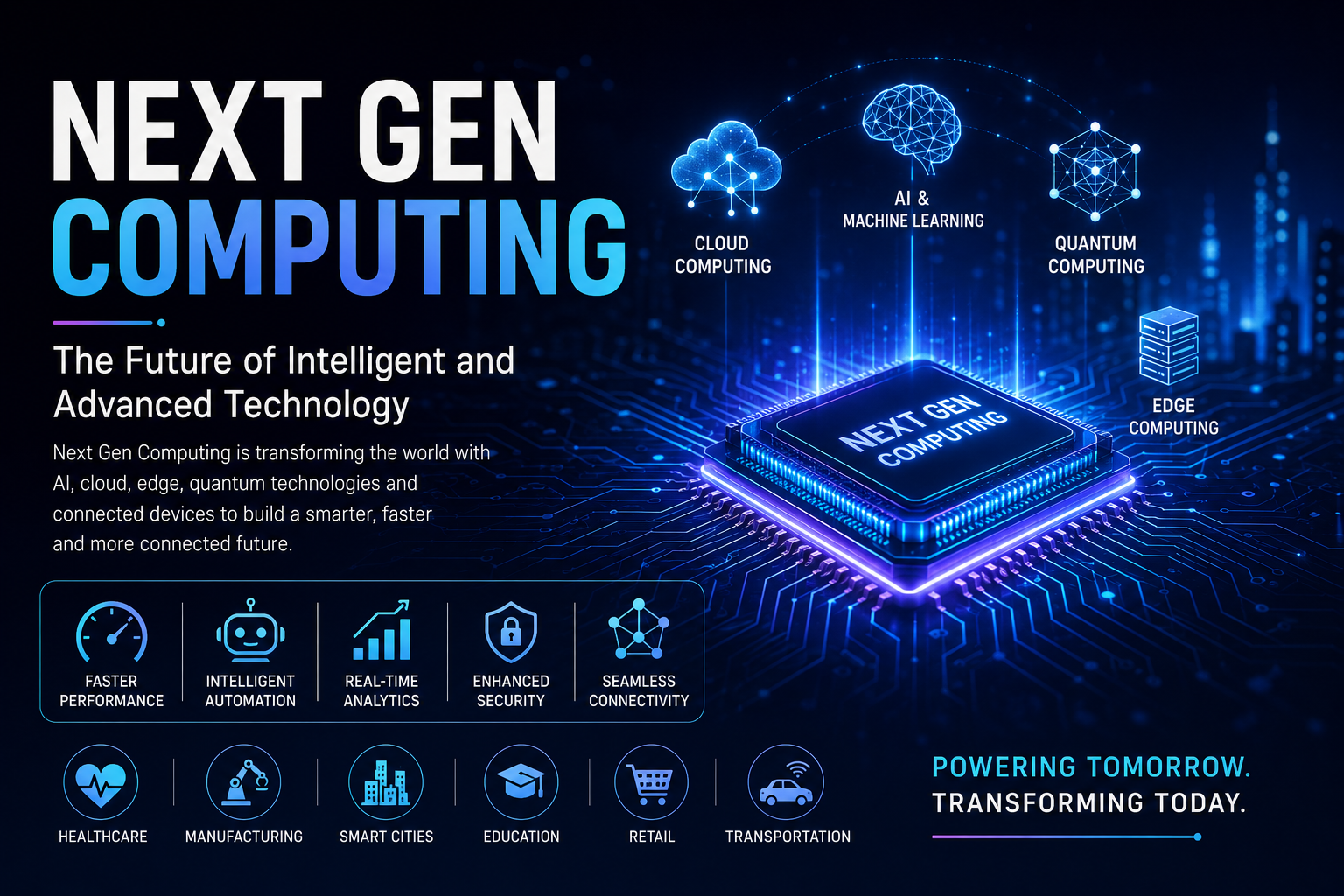
Next Gen refers to advanced computing technologies designed to deliver faster processing, intelligent automation, real-time analytics, and highly personalized digital experiences. It combines innovations such as artificial intelligence, cloud computing, edge computing, quantum computing, and smart devices to create powerful and adaptive computing environments.
As businesses and consumers increasingly depend on digital technologies, the demand for more efficient and intelligent computing systems continues to grow. From smart cities and autonomous vehicles to advanced healthcare systems and intelligent workplaces, Next Gen Computing is becoming one of the most influential technologies shaping the future.
This guide explores everything you need to know about Next Gen, including its technologies, benefits, applications, challenges, and future opportunities.
What Is Next Gen Computing?
Next Gen refers to the next generation of computing technologies that go beyond traditional systems by integrating intelligence, automation, connectivity, and advanced processing capabilities.
Its primary goals include:
- Faster computing performance
- Intelligent decision-making
- Improved automation
- Enhanced user experiences
- Better scalability
- Greater efficiency
Rather than relying solely on centralized systems, modern computing environments use distributed and intelligent technologies to process information more effectively.
Why Next Gen Computing Matters
The digital world generates enormous amounts of information every day.
Traditional systems often struggle with:
- Increasing data volumes
- Real-time processing requirements
- Complex business operations
- Security demands
- Modern user expectations
Next Gen Computing addresses these challenges by introducing smarter and more adaptive technologies.
Core Technologies Behind Next Gen Computing
Artificial Intelligence
Artificial intelligence is one of the biggest drivers of modern computing innovation.
AI helps systems:
- Learn from data
- Predict outcomes
- Automate decisions
- Improve efficiency
- Deliver personalized experiences
Cloud Computing
Cloud platforms provide scalable computing resources that support modern applications.
Benefits include:
- Flexible infrastructure
- Cost efficiency
- Global accessibility
- Better collaboration
Edge Computing
Edge computing processes information closer to where it is generated.
Advantages include:
- Reduced latency
- Faster responses
- Lower bandwidth usage
- Enhanced performance
Quantum Computing
Quantum technologies have the potential to solve highly complex problems much faster than traditional computers.
Future applications may include:
- Scientific research
- Financial modeling
- Drug discovery
- Advanced simulations
Internet of Things
Connected devices continuously collect and exchange information.
Examples include:
- Smart homes
- Wearable devices
- Industrial sensors
- Connected vehicles
The Internet of Things enables intelligent ecosystems and real-time decision-making.
Key Characteristics of Next Gen Computing
Intelligent Automation
Systems increasingly perform complex tasks with minimal human intervention.
Real-Time Processing
Modern applications require immediate responses and continuous data analysis.
Scalability
Organizations can expand computing resources according to changing requirements.
Personalization
Systems can adapt to user preferences and deliver customized experiences.
Continuous Connectivity
Connected technologies create seamless communication between devices and platforms.
Benefits of Next Gen Computing
Increased Productivity
Automation reduces repetitive work and allows employees to focus on higher-value activities.
Better Decision-Making
Real-time analytics provide valuable insights that support informed decisions.
Improved User Experiences
Personalized and responsive technologies increase satisfaction and engagement.
Enhanced Efficiency
Organizations can optimize resources and streamline operations.
Greater Innovation
Advanced computing capabilities create opportunities for new products and services.
Applications of Next Gen Computing
Healthcare
Healthcare organizations use advanced computing technologies for:
- Patient monitoring
- Medical imaging
- Disease prediction
- Research and diagnostics
Business Operations
Companies increasingly rely on intelligent technologies to:
- Automate workflows
- Analyze information
- Improve customer experiences
- Optimize productivity
Smart Cities
Urban environments use intelligent systems for:
- Traffic management
- Public safety
- Energy efficiency
- Resource management
Education
Educational institutions benefit from:
- Personalized learning
- Virtual classrooms
- Intelligent tutoring systems
- Advanced learning analytics
Manufacturing
Industrial organizations use intelligent technologies for:
- Predictive maintenance
- Process automation
- Quality management
- Supply chain optimization
Next Gen Computing and Artificial Intelligence
Artificial intelligence plays a central role in modern computing environments.
AI enables systems to:
- Recognize patterns
- Analyze information
- Learn continuously
- Predict future events
- Automate processes
As AI technologies continue evolving, computing systems are becoming increasingly intelligent and capable.
Next Gen Computing and Cybersecurity
The growing digital landscape creates new security challenges.
Advanced technologies help improve cybersecurity through:
Threat Detection
Intelligent systems can identify suspicious activities and security risks.
Automated Security Responses
Security platforms can react quickly to potential threats.
Predictive Analytics
Advanced analytics help organizations identify vulnerabilities before incidents occur.
Data Protection
Modern computing environments support stronger privacy and security measures.
Challenges of Next Gen Computing
Despite its benefits, several challenges remain.
Security Risks
Connected systems can increase cybersecurity concerns.
Implementation Costs
Advanced technologies often require significant investment.
Technical Complexity
Developing intelligent systems demands specialized expertise.
Data Management
Large volumes of information require effective storage and processing solutions.
Skills Gap
Organizations increasingly need professionals with advanced technology skills.
Future Trends in Next Gen Computing
Greater AI Integration
Artificial intelligence will become deeply integrated into computing systems.
Expansion of Edge Computing
Processing will increasingly move closer to devices and users.
More Intelligent Automation
Automation technologies will continue transforming industries.
Sustainable Computing
Organizations are focusing on energy-efficient computing solutions.
Human and Machine Collaboration
Technology will increasingly assist humans rather than simply replacing manual tasks.
Why Businesses Should Invest in Next Gen Computing
Organizations adopting modern technologies can gain important advantages:
- Higher productivity
- Better customer experiences
- Increased efficiency
- Faster innovation
- Improved competitiveness
Businesses that embrace digital transformation early often position themselves for long-term success.
Frequently Asked Questions
What is Next Gen Computing?
Next Gen Computing refers to advanced technologies that combine artificial intelligence, cloud computing, edge computing, and intelligent automation to create faster and smarter computing environments.
Why is Next Gen Computing important?
It improves efficiency, enables innovation, and helps organizations process information more effectively.
Where is Next Gen Computing used?
It is widely used in healthcare, manufacturing, education, business operations, smart cities, and connected technologies.
How does artificial intelligence support Next Gen Computing?
Artificial intelligence enables intelligent decision-making, automation, and personalized digital experiences.
What is the future of Next Gen Computing?
The future includes greater AI adoption, advanced automation, sustainable technologies, and increasingly intelligent digital ecosystems.
Conclusion
Next Gen represents the next major evolution of technology. By combining artificial intelligence, cloud services, edge computing, connected devices, and advanced analytics, it is transforming how individuals and organizations interact with digital systems.
As industries continue embracing digital transformation, Next Gen Computing is expected to become one of the most important drivers of innovation, efficiency, and economic growth. Organizations that understand and adopt these technologies today will be better prepared for the intelligent and connected world of tomorrow.
About the Author