private ai
Artificial intelligence has transformed the digital world by helping individuals and businesses automate tasks, analyze information, and improve decision-making. However, as private ai becomes more powerful, concerns about privacy, data security, and information sharing continue to grow.
Many traditional AI systems process large amounts of user information on cloud servers. This has increased concerns about how personal and business data is collected, stored, and used. As a result, organizations and technology companies are increasingly focusing on a new concept known as Private AI.
Private AI aims to deliver the benefits of artificial intelligence while maintaining stronger privacy protections and greater control over sensitive information. Instead of exposing personal data to unnecessary risks, Private AI solutions prioritize security, confidentiality, and user trust.
This guide explains everything you need to know about Private AI, including how it works, its benefits, applications, challenges, and future opportunities.
What Is AI?
AI refers to artificial intelligence systems designed to process, analyze, and generate information while minimizing unnecessary exposure of personal or confidential data.
The primary goal is to combine advanced AI capabilities with strong privacy protections.
Private AI solutions often focus on:
- Data security
- User privacy
- Local processing
- Confidential computing
- Controlled data access
- Regulatory compliance
Unlike conventional AI systems that may rely heavily on external servers, Private AI technologies often reduce data sharing and improve information protection.
Why AI Is Becoming Important
Artificial intelligence systems frequently require access to large amounts of information to deliver useful results. However, users and organizations are becoming increasingly concerned about:
- Data breaches
- Identity theft
- Unauthorized information sharing
- Compliance requirements
- Cybersecurity risks
Private AI addresses these concerns by creating systems that prioritize privacy and responsible data handling.
How AI Works
Although implementation methods vary, most solutions follow similar principles.
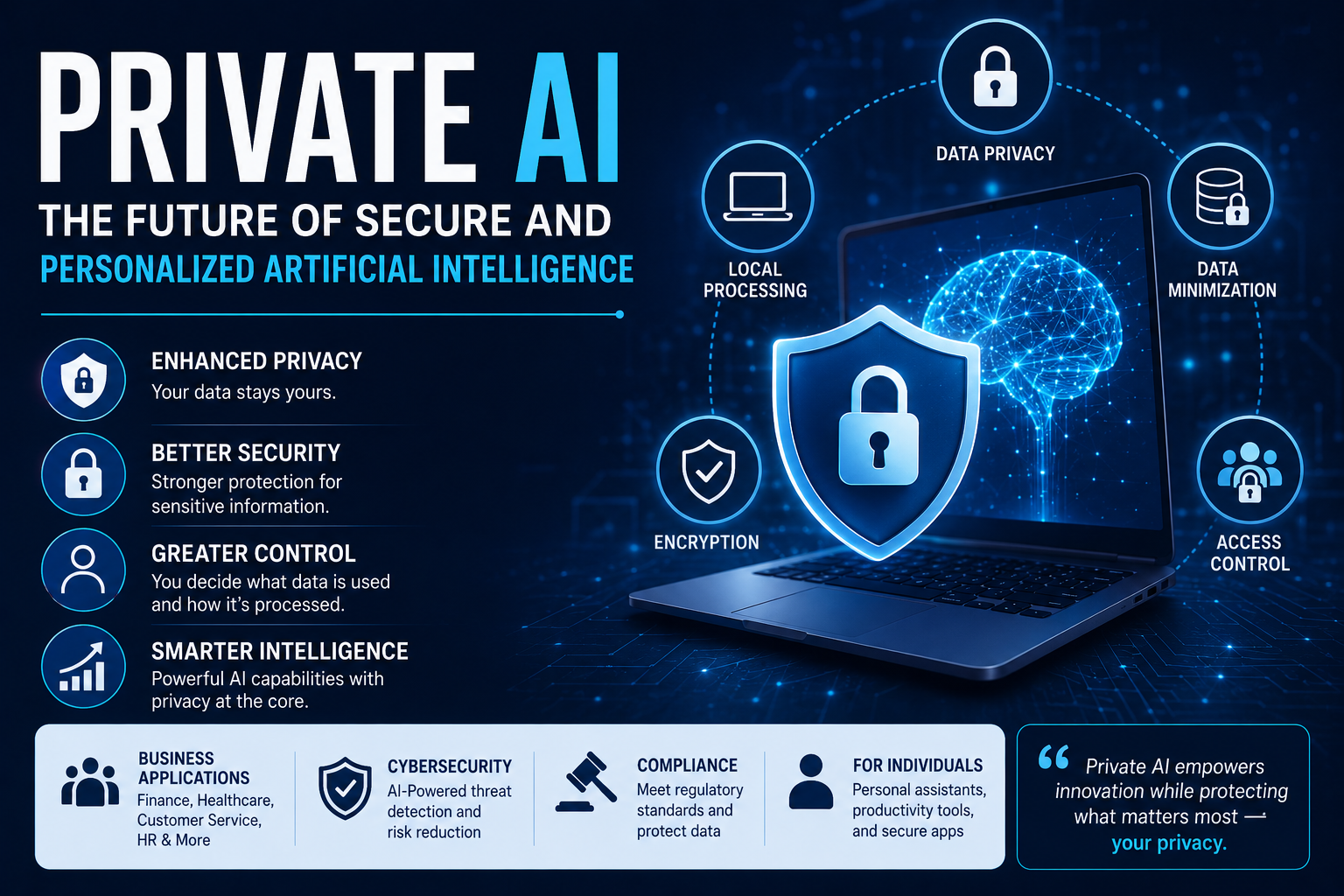
Local Data Processing
Some AI systems process information directly on devices instead of sending all data to external servers.
Benefits include:
- Faster performance
- Reduced data exposure
- Improved privacy
- Better security
Data Minimization
Private AI focuses on collecting only the information necessary to complete specific tasks.
This approach reduces unnecessary data storage and lowers security risks.
Encryption Technologies
Encryption protects information during storage and communication.
Benefits include:
- Secure data transmission
- Better confidentiality
- Reduced cyber risks
Access Controls
Organizations can implement security controls that limit who can access sensitive information.
This improves accountability and reduces the likelihood of unauthorized data exposure.
Key Benefits of AI
Enhanced Privacy
Privacy is one of the biggest advantages.
Users gain greater confidence knowing their information receives stronger protection.
Improved Security
Reducing unnecessary data sharing decreases opportunities for cybercriminals.
Regulatory Compliance
Many industries must comply with strict privacy regulations.
AI can support compliance efforts by improving data governance practices.
Increased Trust
Customers increasingly prefer organizations that prioritize privacy and responsible technology use.
Better Control Over Information
Users and businesses maintain greater control over how their information is processed and stored.
Private AI in Business
Organizations across industries are exploring privacy-focused artificial intelligence solutions.
Customer Service
AI assistants can provide support while protecting sensitive customer information.
Financial Services
Financial institutions can improve fraud detection and risk analysis while maintaining strict privacy standards.
Healthcare
Medical organizations can use intelligent systems to analyze information while protecting patient confidentiality.
Human Resources
Businesses can streamline recruitment and employee management processes while maintaining data privacy.
Enterprise Operations
Organizations can automate workflows and improve efficiency without exposing sensitive business information.
Private AI for Individuals
Privacy-focused artificial intelligence also benefits everyday users.
Applications include:
- Personal productivity tools
- Smart assistants
- Writing applications
- Note-taking systems
- Secure search experiences
Users can enjoy AI-powered services with greater confidence in how their information is handled.
Private AI and Cybersecurity
Cybersecurity and privacy are closely connected.
Organizations implementing Private AI often focus on:
Threat Detection
AI can help identify unusual activities and potential security incidents.
Data Protection
Sensitive information can receive stronger protection through secure processing methods.
Risk Reduction
Minimizing unnecessary data exposure reduces cybersecurity risks.
Secure Communication
AI-powered security systems can help monitor and protect digital communications.
Challenges of Private AI
Although promising, Private AI solutions also face certain challenges.
Processing Requirements
Local processing may require powerful hardware and optimized software.
Implementation Costs
Building secure AI systems often requires significant investment.
Technical Complexity
Developing privacy-focused solutions can be technically demanding.
Balancing Performance and Privacy
Organizations must carefully balance functionality, efficiency, and privacy protections.
Future Trends
The future of artificial intelligence is increasingly focused on responsible innovation.
Key trends may include:
On-Device Intelligence
More AI capabilities may run directly on personal devices.
Confidential Computing
Advanced technologies may improve secure processing environments.
Privacy-First Design
Organizations are expected to prioritize privacy during product development.
Enterprise AI Adoption
Businesses will increasingly seek secure AI solutions that protect sensitive information.
Stronger Regulations
Governments around the world continue developing regulations that encourage responsible use of artificial intelligence.
Why Private AI Matters
As digital transformation accelerates, the importance of protecting personal and business information continues to grow.
Privacy-focused artificial intelligence provides several advantages:
- Greater trust
- Improved security
- Better compliance
- Enhanced user experiences
- Responsible innovation
Organizations that prioritize privacy may gain significant competitive advantages in the future.
Frequently Asked Questions
What is Private AI?
Private AI refers to artificial intelligence systems designed to deliver intelligent capabilities while protecting sensitive information and minimizing unnecessary data exposure.
Why is Private AI important?
It helps improve privacy, security, and trust while reducing data-related risks.
Is Private AI more secure?
Many privacy-focused systems use encryption, local processing, and strict access controls to improve security.
Who can benefit from AI?
Businesses, healthcare providers, financial institutions, government organizations, and individual users can all benefit from privacy-focused AI technologies.
What is the future of AI?
The future is expected to include more on-device processing, privacy-first development practices, and broader adoption across industries.
Conclusion
Private AI represents an important evolution in artificial intelligence. As concerns about data privacy and cybersecurity continue to grow, organizations and individuals increasingly seek solutions that combine intelligence with responsible data protection.
By emphasizing privacy, security, and user control, Private AI offers a promising approach for the future of digital innovation. As technology continues to advance, privacy-focused artificial intelligence is likely to become one of the most important trends shaping the next generation of intelligent systems.
About the Author