device intelligence
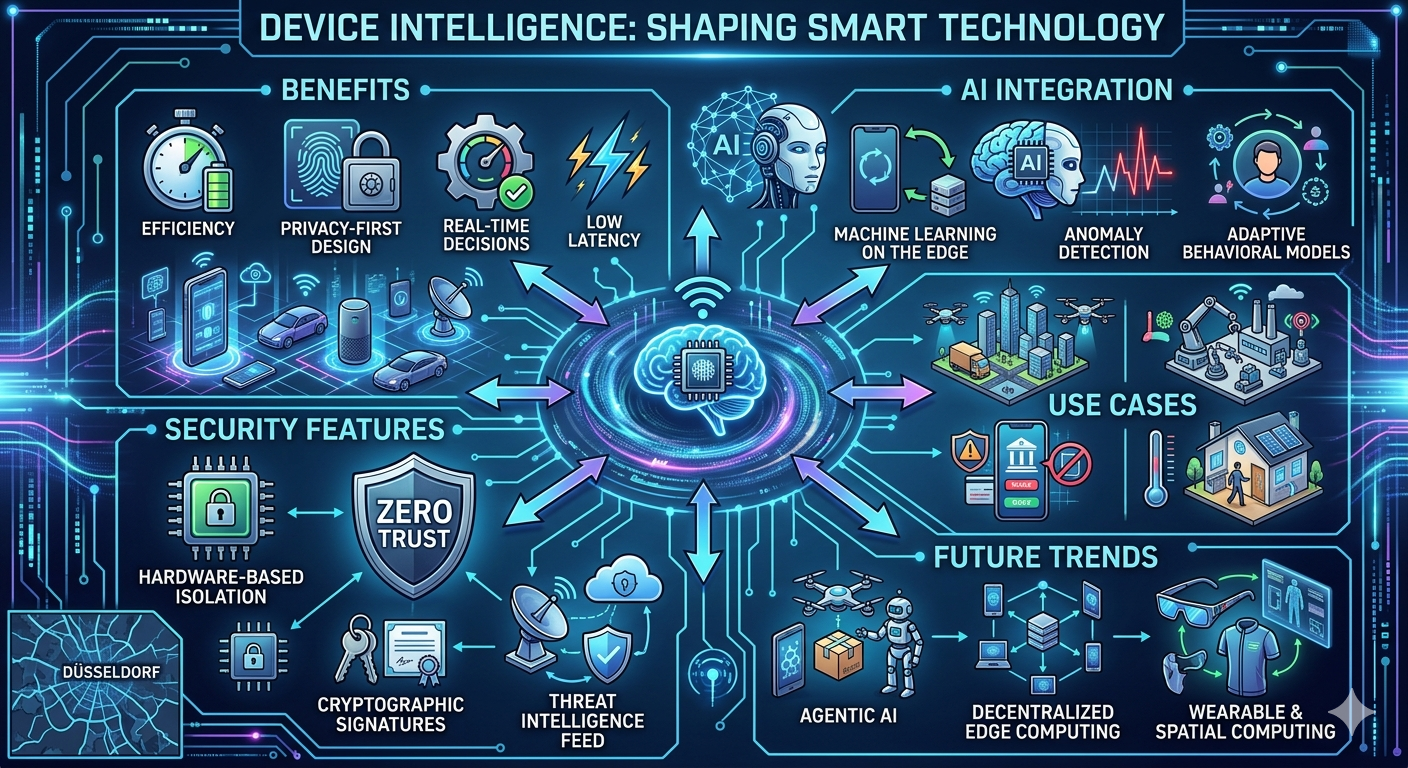
Technology is becoming smarter every year. Modern devices are no longer limited to performing basic functions. Smartphones, computers, wearables, and smart home products can now analyze information, learn user behavior, and make intelligent decisions in real time device intelligence.
This evolution has given rise to a concept known as Device Intelligence. It refers to the ability of devices to collect, process, and interpret data to deliver more personalized, efficient, and secure experiences.
As artificial intelligence, machine learning, and edge computing continue to evolve, Device Intelligence is becoming an essential part of the digital world. Businesses and consumers increasingly rely on intelligent devices to simplify tasks, improve productivity, and enhance security.
This guide explores everything you need to know about Device Intelligence, including how it works, benefits, applications, challenges, and future opportunities.
What Is Device Intelligence?
Device Intelligence is the capability of digital devices to understand data, learn from user interactions, and make intelligent decisions without requiring constant human input.
It combines several technologies, including:
- Artificial Intelligence (AI)
- Machine Learning (ML)
- Sensors and Analytics
- Cloud Computing
- Edge Computing
- Data Processing Systems
The goal is to create devices that can adapt to user needs and improve experiences automatically.
Why Device Intelligence Matters
Modern users expect technology to be fast, personalized, and secure.
Intelligent devices help achieve these goals by:
- Automating routine tasks
- Improving decision-making
- Enhancing security
- Delivering personalized experiences
- Optimizing performance
- Increasing efficiency
As digital transformation accelerates, intelligent devices are becoming increasingly important across industries.
How Device Intelligence Works
Data Collection
Devices collect information from multiple sources, including:
- User interactions
- Sensors
- Applications
- System activities
- Connected devices
Data Analysis
Artificial intelligence algorithms analyze the collected information and identify patterns.
Decision Making
The system uses insights to make intelligent decisions and improve functionality.
Continuous Learning
Machine learning allows devices to improve over time by learning from previous interactions and behaviors.
Key Features of Device Intelligence
Personalization
Intelligent systems can understand user preferences and deliver customized experiences.
Examples include:
- Personalized recommendations
- Adaptive interfaces
- Customized notifications
- Smart content suggestions
Automation
Devices can perform repetitive tasks automatically, reducing manual effort.
Real-Time Processing
Modern systems analyze information instantly and respond quickly to changing conditions.
Context Awareness
Intelligent devices can understand user situations and provide relevant actions or information.
Benefits of Device Intelligence
Better User Experience
Personalized interactions make devices easier and more enjoyable to use.
Improved Productivity
Automation allows users to focus on more important tasks.
Enhanced Security
Intelligent systems can identify unusual activities and reduce security risks.
Faster Decision-Making
Real-time insights help businesses and individuals make better decisions.
Increased Efficiency
Resources are utilized more effectively through intelligent automation and optimization.
Applications of Device Intelligence
Smartphones
Modern smartphones use intelligent technologies for:
- Voice assistants
- Camera optimization
- Battery management
- Predictive text
- Personalized recommendations
Smart Homes
Connected home devices use intelligence to:
- Manage lighting
- Control temperature
- Improve security
- Automate household activities
Healthcare
Medical organizations use intelligent devices to:
- Monitor patients
- Analyze health information
- Support diagnosis
- Improve patient care
Transportation
Smart technologies help improve:
- Navigation systems
- Traffic management
- Driver assistance
- Vehicle safety
Business Operations
Organizations use intelligent devices to:
- Automate workflows
- Analyze data
- Improve customer experiences
- Optimize productivity
Device Intelligence and Artificial Intelligence
Artificial intelligence is one of the driving forces behind intelligent devices.
AI enables systems to:
- Learn continuously
- Recognize patterns
- Predict outcomes
- Improve decision-making
- Deliver personalized experiences
As AI technologies advance, devices are becoming increasingly capable and adaptive.
Device Intelligence and Cybersecurity
Security has become a major concern in today’s digital environment.
Intelligent technologies can strengthen cybersecurity by:
Threat Detection
Systems can identify unusual activities and potential risks.
Fraud Prevention
Advanced analytics help recognize suspicious behavior.
User Authentication
Intelligent systems can support secure verification methods.
Risk Management
Organizations can respond to threats more quickly and effectively.
Challenges of Device Intelligence
Although promising, several challenges remain.
Privacy Concerns
Large amounts of data require responsible handling and protection.
Security Risks
Connected devices can become targets for cyberattacks.
Implementation Costs
Advanced technologies may require significant investment.
Technical Complexity
Developing and managing intelligent systems can be challenging.
Future Trends
The future of intelligent devices looks highly promising.
Edge Intelligence
More processing will occur directly on devices rather than relying entirely on cloud services.
AI Integration
Artificial intelligence capabilities will continue expanding.
Predictive Technology
Devices will become better at anticipating user needs.
Smarter Connectivity
Connected ecosystems will improve communication between devices.
Personalized Experiences
Technology will increasingly adapt to individual preferences and behaviors.
Why Device Intelligence Is Important for Businesses
Businesses adopting intelligent technologies can gain several advantages:
- Higher productivity
- Better customer experiences
- Improved decision-making
- Enhanced operational efficiency
- Stronger competitive positioning
Organizations that embrace intelligent technologies are often better prepared for future digital transformation.
Frequently Asked Questions
What is Device Intelligence?
Device Intelligence refers to the ability of digital devices to collect data, analyze information, and make intelligent decisions using technologies such as artificial intelligence and machine learning.
How does Device Intelligence work?
It gathers information, analyzes patterns, learns from interactions, and continuously improves performance.
Why is Intelligence important?
It improves personalization, security, productivity, and overall user experiences.
Where is Intelligence used?
It is widely used in smartphones, smart homes, healthcare, transportation, and business environments.
What is the future of Intelligence?
The future includes greater AI integration, edge computing, predictive systems, and increasingly personalized digital experiences.
Conclusion
Device Intelligence is transforming the way people interact with technology. By combining artificial intelligence, machine learning, and real-time data processing, intelligent devices can deliver more personalized, secure, and efficient experiences.
As technology continues to evolve, Device Intelligence is expected to become one of the most important drivers of innovation across industries. Businesses and individuals that embrace these advancements will be better positioned to benefit from the next generation of smart and connected technologies.
About the Author