Remote Work
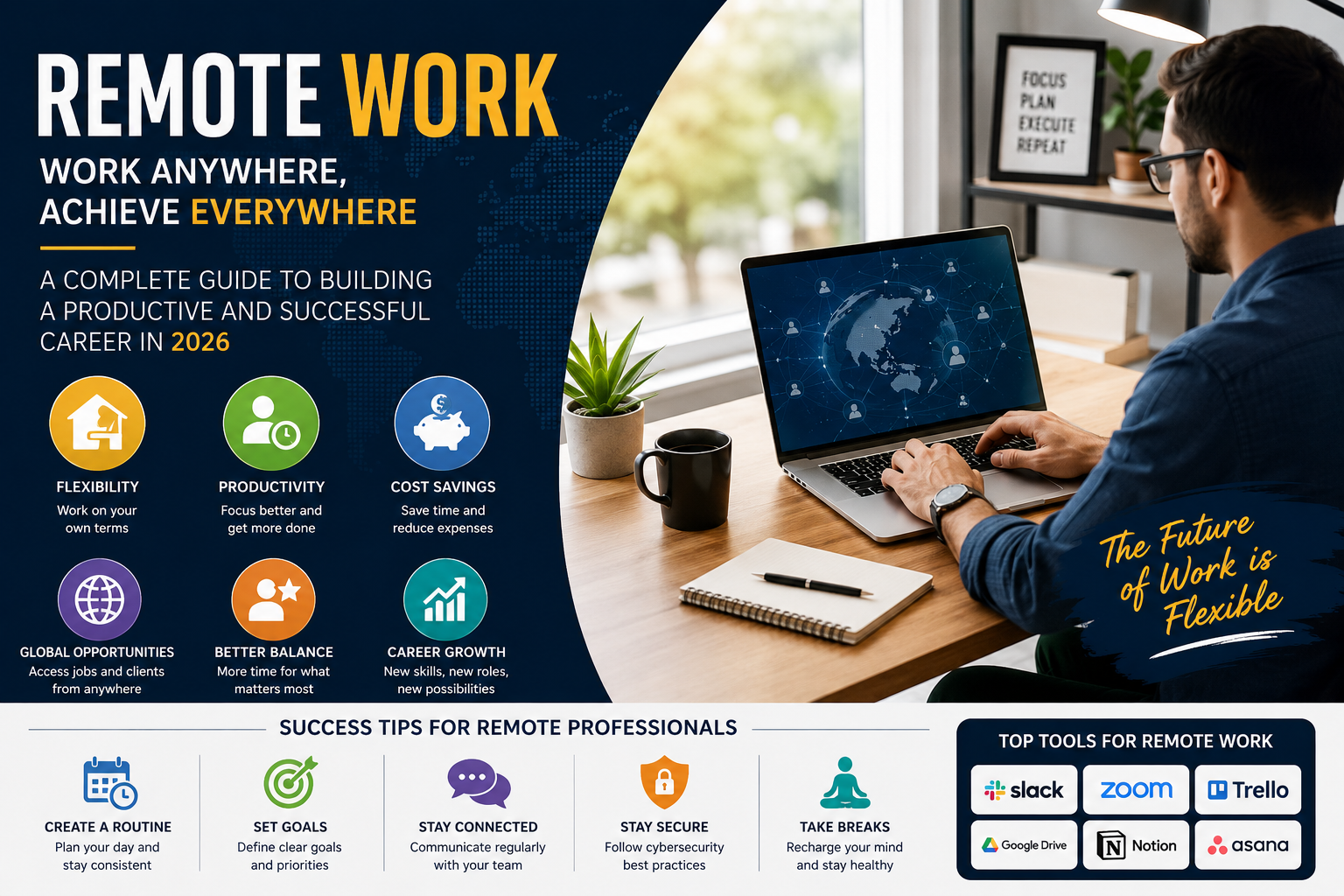
Remote work has transformed the modern workplace. What was once considered a flexible perk has now become a standard working model for millions of professionals worldwide. Advances in technology, cloud computing, video conferencing, and digital collaboration tools have made it possible for employees and businesses to operate efficiently from virtually any location.
Organizations across industries are embracing flexible work arrangements to attract talent, reduce operational costs, and improve employee satisfaction. At the same time, professionals are seeking greater flexibility, better work-life balance, and opportunities that are no longer limited by geography.
This comprehensive guide explores the concept of remote work, its benefits, challenges, best practices, essential tools, and future trends shaping the digital workforce.
What Is Remote Work?
Remote work refers to a working arrangement where employees perform their job responsibilities outside a traditional office environment.
Instead of commuting to a physical workplace every day, professionals use digital technologies to communicate, collaborate, and complete tasks from locations such as:
- Home offices
- Co-working spaces
- Cafes
- Shared work hubs
- International locations
The primary goal is to maintain productivity while providing greater flexibility.
The Rise of the Digital Workplace
The workplace has undergone significant changes over the past decade.
Several factors have contributed to the growth of flexible work environments:
Technological Advancements
Cloud-based software and collaboration platforms allow teams to work together seamlessly.
Global Talent Access
Organizations can hire skilled professionals regardless of location.
Employee Expectations
Modern workers increasingly prioritize flexibility and work-life balance.
Business Efficiency
Companies can reduce office expenses while maintaining operational performance.
As a result, remote work has become a long-term business strategy rather than a temporary solution.
Key Benefits of Remote Work
Improved Work-Life Balance
One of the biggest advantages is greater control over daily schedules.
Employees can:
- Reduce commuting time
- Spend more time with family
- Manage personal responsibilities effectively
- Create healthier routines
This often leads to improved job satisfaction and overall well-being.
Increased Productivity
Many professionals report higher productivity when working remotely.
Benefits include:
- Fewer workplace distractions
- Customized work environments
- Flexible schedules
- Better concentration
When managed correctly, productivity levels can exceed those of traditional office settings.
Access to Global Opportunities
Geographical limitations are significantly reduced.
Professionals can work for companies located in different cities, countries, or continents without relocating.
This creates access to a much larger job market.
Cost Savings
Both employees and employers can benefit financially.
Employees may save money on:
- Transportation
- Fuel
- Parking
- Professional attire
- Daily meals
Organizations can reduce expenses related to office space and utilities.
Enhanced Employee Satisfaction
Flexibility often contributes to higher morale and improved employee retention.
Workers who have greater control over their schedules tend to experience increased job satisfaction.
Common Challenges
Despite its advantages, remote work also presents challenges.
Communication Barriers
Without face-to-face interactions, communication misunderstandings can occur.
Clear communication strategies are essential.
Isolation
Working alone for extended periods may lead to feelings of isolation.
Maintaining social connections is important for long-term success.
Work-Life Boundaries
Some professionals struggle to separate personal and professional responsibilities.
Creating structured routines can help establish healthy boundaries.
Time Zone Differences
Global teams often operate across multiple time zones.
Scheduling meetings and coordinating projects requires careful planning.
Security Risks
Remote environments may increase cybersecurity risks if proper precautions are not implemented.
Essential Skills for Remote Professionals
Success in a distributed work environment requires specific skills.
Self-Discipline
Professionals must manage their time effectively without direct supervision.
Communication Skills
Clear written and verbal communication is critical.
Adaptability
Technology and workflows evolve rapidly, requiring continuous learning.
Problem-Solving
Remote employees often need to solve issues independently.
Digital Literacy
Understanding collaboration and productivity tools is essential.
Best Remote Work Tools
Technology plays a central role in productivity.
Communication Platforms
Effective communication tools support collaboration and teamwork.
Popular features include:
- Video conferencing
- Instant messaging
- Team discussions
- Virtual meetings
Project Management Software
Project management platforms help teams:
- Track progress
- Assign tasks
- Meet deadlines
- Improve accountability
Cloud Storage Solutions
Cloud services enable secure file access from anywhere.
Benefits include:
- Real-time collaboration
- Automatic backups
- Easy sharing
- Improved accessibility
Productivity Applications
Productivity tools help professionals:
- Manage schedules
- Organize tasks
- Track goals
- Improve efficiency
Creating an Effective Home Office
A dedicated workspace can significantly improve performance.
Choose a Quiet Environment
Minimize distractions whenever possible.
Invest in Ergonomic Equipment
Proper seating and desk arrangements support comfort and health.
Ensure Reliable Internet
Stable connectivity is essential for communication and productivity.
Maintain Organization
A clean workspace helps improve focus and efficiency.
Time Management Strategies
Managing time effectively is one of the most important aspects of professional success.
Establish a Routine
Consistent schedules help create structure.
Prioritize Tasks
Focus on high-impact activities first.
Set Clear Goals
Define daily, weekly, and monthly objectives.
Avoid Multitasking
Concentrating on one task at a time often improves quality and efficiency.
Schedule Breaks
Regular breaks help maintain focus and reduce burnout.
Cybersecurity Best Practices
Remote professionals should take security seriously.
Use Strong Passwords
Unique passwords reduce vulnerability.
Enable Multi-Factor Authentication
Additional verification strengthens account security.
Update Software Regularly
Updates help protect against emerging threats.
Use Secure Networks
Public Wi-Fi should be avoided whenever possible.
Protect Sensitive Information
Confidential data should be handled carefully.
Remote Work Career Opportunities
Many industries now support flexible work arrangements.
Popular remote-friendly careers include:
- Software Development
- Digital Marketing
- Content Writing
- Graphic Design
- Data Analysis
- Customer Support
- Project Management
- Consulting
- Virtual Assistance
- Online Education
The variety of available opportunities continues to expand.
Future Trends
The future of work is expected to become increasingly digital.
Emerging trends include:
Artificial Intelligence Integration
AI tools will automate repetitive tasks and improve productivity.
Hybrid Work Models
Many organizations will combine office and remote arrangements.
Global Hiring Expansion
Companies will continue recruiting talent internationally.
Virtual Collaboration
Advanced collaboration technologies will improve teamwork.
Digital-First Organizations
Businesses will increasingly design operations around remote capabilities.
Frequently Asked Questions
Is remote work suitable for every profession?
No. Some industries require physical presence, but many knowledge-based roles can be performed remotely.
Does working remotely improve productivity?
For many professionals, productivity improves due to fewer distractions and greater flexibility.
What skills are important for success?
Self-discipline, communication, adaptability, and digital literacy are among the most valuable skills.
Can remote workers advance their careers?
Yes. Many organizations offer leadership and growth opportunities regardless of employee location.
What is the future of remote work?
The future is expected to include more hybrid models, increased flexibility, and greater reliance on digital technologies.
Conclusion
Remote work has fundamentally changed how organizations operate and how professionals build their careers. By combining flexibility, technology, and effective management practices, businesses and employees can achieve higher productivity, improved satisfaction, and greater opportunities.
As digital transformation continues, remote work will remain an important component of the modern workplace. Professionals who develop strong communication skills, embrace technology, and maintain disciplined work habits will be well-positioned for long-term success in this evolving environment.
About the Author