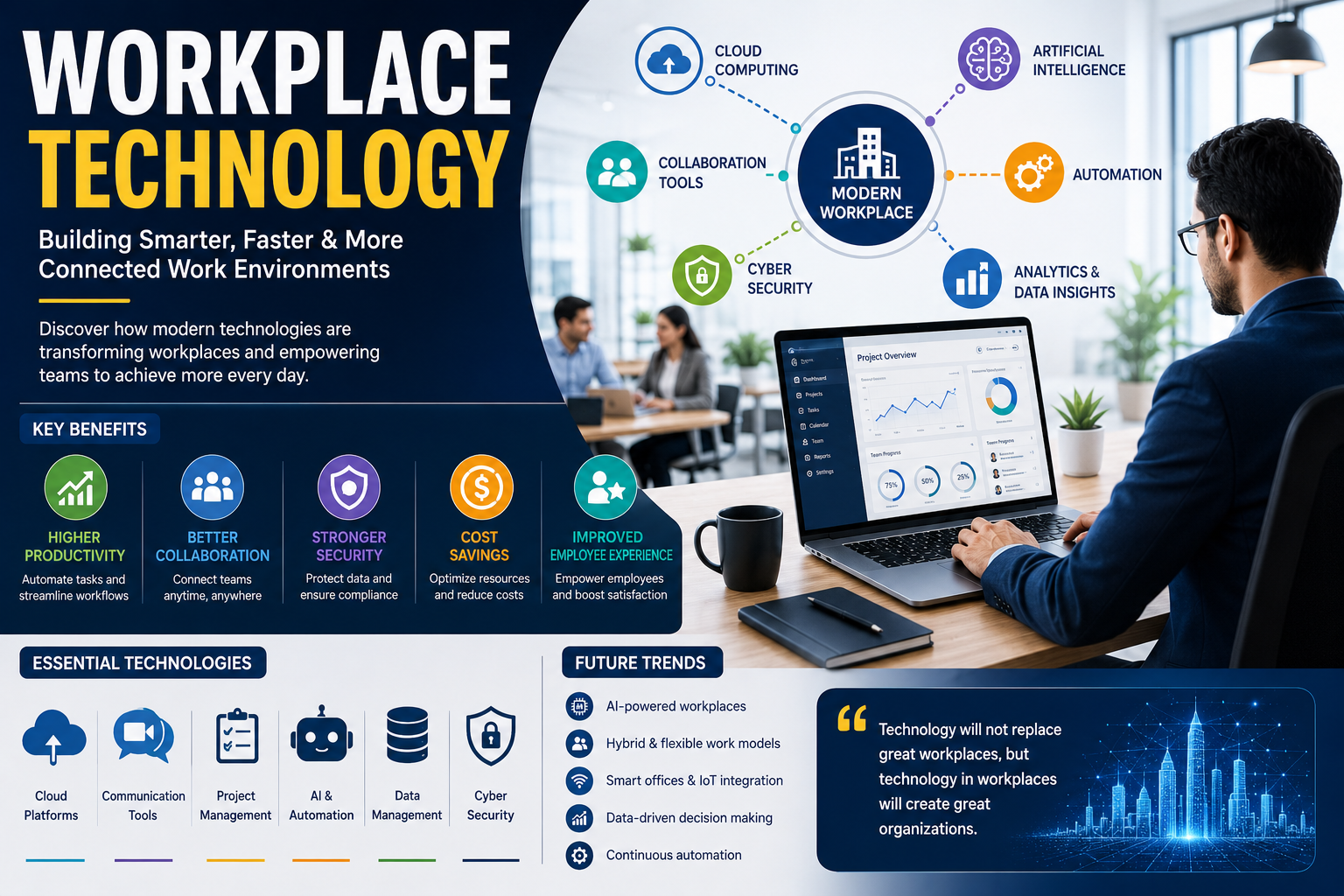
Workplace Technology
Workplace technology has become a critical component of modern business operations. Organizations worldwide are investing in digital tools, cloud platforms, artificial intelligence, and automation solutions to improve productivity, communication, and efficiency. As businesses continue adapting to changing work environments, technology is playing a central role in shaping how employees collaborate, manage tasks, and achieve organizational goals.
From remote work platforms to AI-powered productivity tools, workplace technology is transforming traditional office environments into connected digital ecosystems. Companies that embrace these innovations can improve employee performance, reduce operational costs, and remain competitive in an increasingly digital economy.
This guide explores workplace technology, its benefits, key components, emerging trends, challenges, and its impact on the future of work.
What Is Workplace Technology?
Workplace technology refers to the digital tools, software, hardware, and systems that organizations use to support employees and improve business operations.
These technologies help businesses:
- Improve communication
- Enhance productivity
- Automate repetitive tasks
- Manage projects efficiently
- Support remote and hybrid work
- Strengthen cybersecurity
Modern organizations rely on workplace technology to streamline workflows and create more efficient work environments.
Why Workplace Technology Matters
Technology has become essential for businesses of all sizes. Companies that effectively implement digital solutions often experience significant improvements in performance and employee satisfaction.
Key reasons workplace technology matters include:
Increased Productivity
Digital tools help employees complete tasks more efficiently by reducing manual work and improving access to information.
Better Communication
Modern communication platforms enable instant collaboration regardless of location.
Enhanced Flexibility
Employees can work from offices, homes, or remote locations while remaining connected to their teams.
Improved Decision-Making
Advanced analytics and reporting tools provide valuable insights that support business decisions.
Key Components of Workplace Technology
Cloud Computing
Cloud-based platforms allow employees to access files, applications, and data from anywhere with an internet connection.
Benefits include:
- Scalability
- Flexibility
- Cost efficiency
- Improved collaboration
Collaboration Tools
Modern workplaces depend on collaboration software that enables teams to communicate and share information in real time.
Common features include:
- Video conferencing
- Team messaging
- File sharing
- Virtual meetings
Project Management Systems
Project management platforms help organizations:
- Track progress
- Assign responsibilities
- Monitor deadlines
- Improve accountability
These tools support efficient teamwork and project execution.
Artificial Intelligence
AI is becoming an important part of workplace technology.
Applications include:
- Automated customer support
- Data analysis
- Content generation
- Workflow automation
- Predictive insights
AI helps businesses save time and improve operational efficiency.
Benefits of Workplace Technology
Improved Employee Experience
Technology simplifies daily tasks and reduces workplace frustration.
Faster Communication
Teams can communicate instantly through digital platforms.
Increased Efficiency
Automation reduces repetitive work and allows employees to focus on higher-value activities.
Better Collaboration
Employees can collaborate effectively regardless of physical location.
Cost Savings
Digital solutions often reduce expenses associated with travel, office space, and manual processes.
Workplace Technology and Remote Work
The rise of remote and hybrid work models has accelerated technology adoption.
Organizations now rely on:
- Cloud storage
- Video conferencing
- Virtual collaboration platforms
- Digital security solutions
These technologies enable employees to remain productive from virtually any location.
Cybersecurity in the Modern Workplace
As organizations become more digital, cybersecurity becomes increasingly important.
Businesses should focus on:
- Data protection
- Multi-factor authentication
- Employee security training
- Secure cloud environments
- Threat monitoring
Strong security practices help protect sensitive information from cyber threats.
Emerging Trends
Artificial Intelligence Integration
AI-powered tools are improving productivity and decision-making across industries.
Automation
Businesses are automating repetitive tasks to increase efficiency.
Digital Employee Experience
Organizations are investing in technologies that improve employee engagement and satisfaction.
Smart Workspaces
Connected offices use sensors, analytics, and automation to optimize workplace operations.
Hybrid Work Solutions
Technology continues to support flexible work arrangements and distributed teams.
Challenges
Despite its benefits, workplace technology can present challenges.
Implementation Costs
New systems may require significant investment.
Employee Training
Workers need proper training to use technology effectively.
Security Risks
Digital environments can create cybersecurity vulnerabilities.
Change Management
Employees may resist new technologies if changes are not managed properly.
Best Practices
Organizations can maximize success by:
- Selecting technology that aligns with business goals
- Providing employee training
- Prioritizing cybersecurity
- Monitoring performance metrics
- Continuously evaluating technology needs
These strategies help ensure successful implementation and long-term value.
The Future of Workplace Technology
The future workplace will become increasingly connected, intelligent, and automated.
Future innovations may include:
- Advanced AI assistants
- Predictive analytics
- Virtual collaboration environments
- Smart office systems
- Enhanced digital security
Businesses that embrace these innovations will be better positioned for long-term growth and competitiveness.
Frequently Asked Questions
What is workplace technology?
Workplace technology includes digital tools, software, and systems that help employees communicate, collaborate, and perform their jobs efficiently.
Why is workplace technology important?
It improves productivity, communication, flexibility, and overall business performance.
How does workplace technology support remote work?
It enables employees to access resources, communicate, and collaborate from any location.
What role does AI play in workplace technology?
AI helps automate tasks, analyze data, improve decision-making, and increase productivity.
What is the future of workplace technology?
The future includes greater automation, AI integration, smart workspaces, and enhanced digital collaboration.
Conclusion
Workplace technology is transforming how organizations operate in the digital age. By leveraging cloud computing, artificial intelligence, collaboration platforms, and automation tools, businesses can improve productivity, enhance employee experiences, and remain competitive in a rapidly evolving marketplace.
As technology continues to advance, organizations that invest in innovative workplace solutions will be better equipped to adapt, grow, and succeed in the future of work.
About the Author